


Gas Measurement Instruments: The Ultimate Buyer’s Guide for Australian Industry 2026
What if the very technology meant to protect your workforce is actually introducing invisible risks into your operation? You likely understand that maintaining peak safety standards in the Australian resources sector is a non-negotiable commitment to excellence. Yet, the persistent burden of sensor poisoning and the high capital expenditure required for a pristine fleet often create a friction that challenges even the most seasoned project managers. Securing the right gas measurement instruments shouldn't feel like a compromise between your budget and your zero-incident aspirations. Every professional deserves equipment that reflects the status and precision of their work without the looming fear of a failed safety audit.
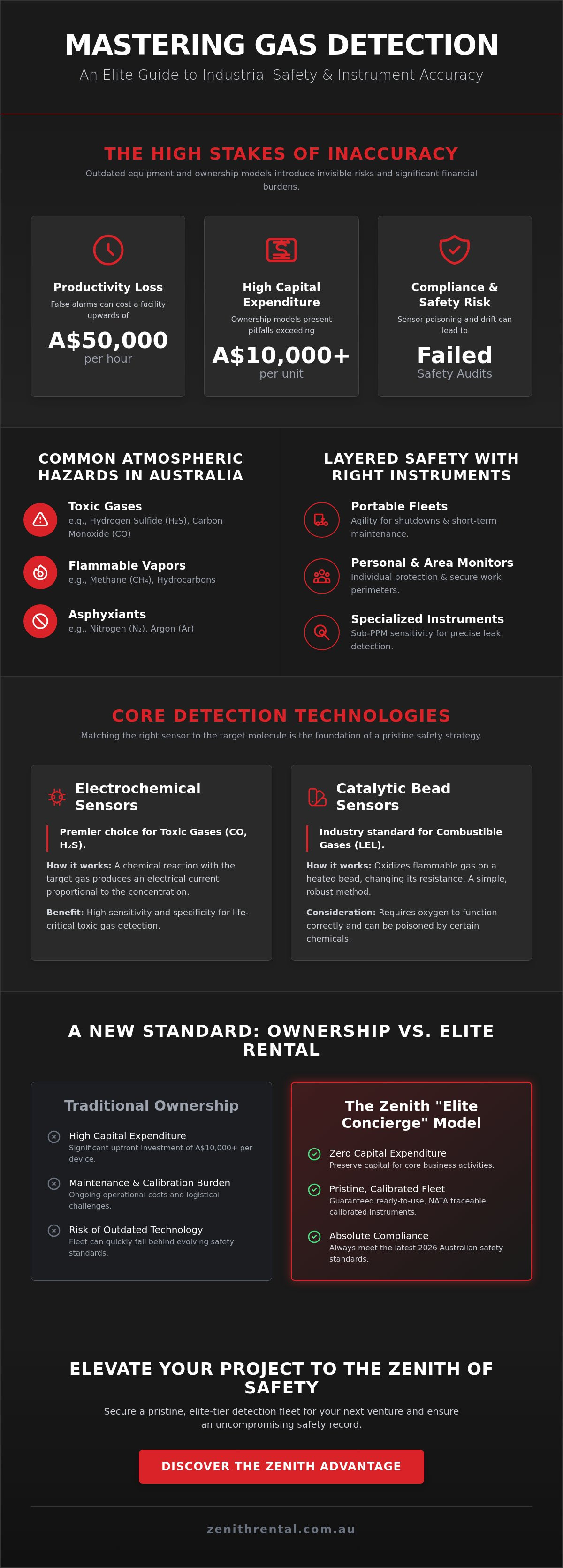
This comprehensive guide empowers you to master the complexities of detection technology and secure elite-tier accuracy for your next industrial venture. We'll explore how to achieve a seamless integration of high-performance sensors into your site workflows while avoiding the A$10,000 plus pitfalls associated with outdated ownership models. From interpreting the latest 2026 Australian safety standards to selecting the pinnacle of measurement precision, you'll discover the path to an uncompromising safety record and unmatched operational efficiency. It's time to elevate your site's performance to the zenith of modern industrial standards.
Key Takeaways
- Navigate the evolution of detection technology to transform your safety protocol from basic monitoring into a sophisticated, data-driven analytical strategy.
- Secure elite-tier accuracy by mastering the strategic selection of gas measurement instruments, including high-performance multi-gas monitors tailored for complex Australian industrial environments.
- Ensure absolute compliance with Australian Standards through a rigorous understanding of NATA traceable calibration and the essential daily protocols required for life-safety assets.
- Discover how the Zenith "Elite Concierge" model provides a seamless, pristine rental experience that guarantees your project is equipped with the industry's most reliable, ready-to-use technology.
Understanding the Landscape of Modern Gas Measurement Instruments
In the demanding landscapes of Australian industry, gas measurement instruments serve as far more than mere equipment. They represent the ultimate line of defense for your workforce and the pristine integrity of your operations. These critical life-safety assets have evolved significantly; they've moved from rudimentary alarms into sophisticated, data-logging analytical tools that offer a seamless bridge between raw atmospheric data and actionable safety intelligence. This evolution ensures that every breath taken in a confined space or near a processing plant is backed by elite technology. Australian occupational health and safety standards demand this level of rigor, particularly as we look toward the complex industrial projects slated for 2026.
The Australian industrial sector faces a diverse array of atmospheric hazards daily. Workers frequently encounter a trio of threats: toxic gases such as Hydrogen Sulfide, flammable vapors like Methane, and silent asphyxiants like Nitrogen. Understanding the nuances of Gas detection technologies is the first step in curating a safety suite that reflects a commitment to excellence. By choosing high-performance gas measurement instruments, you aren't just ticking a compliance box; you're investing in a culture of prestige and absolute reliability.
The Role of Precision in Industrial Safety
Elite sensor technology provides the high resolution needed to prevent false alarms. These interruptions are more than an annoyance; they can cost a facility upwards of A$50,000 per hour in lost productivity and unnecessary site shutdowns. Modern gas measurement instruments account for environmental shifts that often plague lesser equipment. Whether it's the 90% humidity levels found in tropical Queensland or the 45-degree heat of the Pilbara, pristine instrumentation maintains its accuracy. By selecting equipment that thrives under these extremes, you establish a best-in-class safety culture that mirrors the high performance of your most valued assets.
Classifying Instruments by Application
The architecture of a sophisticated safety strategy depends on the strategic deployment of both mobile and permanent assets. Choosing the right tool for the journey is essential:
- Portable Fleets: These provide the agility required for shutdowns and short-term maintenance, offering a flexible shield for contractors and mobile teams.
- Personal vs. Area Monitors: Layering your strategy involves personal monitors for individual protection and area monitors to establish a secure perimeter for entire work groups.
- Specialized Instruments: For those seeking the zenith of detection, specialized tools now offer sub-ppm (parts per million) sensitivity for precise leak detection and emissions monitoring.
This layered approach ensures that your safety measures are as comprehensive as they are reliable. It's about creating an environment where safety is a seamless, quiet confidence that allows your team to focus on achieving their best work.
Essential Detection Technologies: From Catalytic Bead to Infrared
Selecting the correct sensor for your specific industrial environment is the foundation of a sophisticated safety strategy. High-performance gas measurement instruments don't just provide data; they offer the absolute reliability required to protect elite workforces in volatile conditions. The science of gas detection relies on matching the sensor's chemical or physical properties to the target molecule, ensuring that your monitoring fleet operates with pristine accuracy.
Electrochemical and Catalytic Bead Sensors
Electrochemical sensors are the premier choice for detecting toxic gases like Carbon Monoxide (CO) and Hydrogen Sulphide (H2S). These components function through a chemical reaction that produces an electrical current proportional to the gas concentration. For combustible gases, catalytic bead sensors remain the industry standard for monitoring Lower Explosive Limits (LEL). These sensors oxidise flammable gas on a heated bead, though they require oxygen to function correctly.
Maintaining these traditional sensors requires a commitment to detail. Catalytic beads are susceptible to "poisoning" from silicones, lead, and sulphur compounds, which can permanently degrade their sensitivity. Adhering to Australian standards for confined spaces is essential when managing these risks, as regular calibration ensures the longevity and precision of your instruments. For projects requiring the highest level of uptime, choosing a partner like Zenith Rental provides access to meticulously maintained equipment that eliminates the burden of sensor maintenance.
Advanced Infrared (IR) and Photoionisation (PID) Detection
When your operations move into oxygen-depleted zones, infrared (IR) technology is unmatched. Unlike catalytic sensors, IR detectors don't require oxygen and are immune to chemical poisoning, making them the elite choice for Carbon Dioxide (CO2) and hydrocarbon monitoring. For the detection of Volatile Organic Compounds (VOCs), Photoionisation Detectors (PID) use ultraviolet light to ionise gas molecules, providing a seamless way to monitor low-level toxins that other sensors might miss.
The latest evolution in the Australian market involves laser-based gas detection. These systems offer a level of accuracy for methane leaks that was previously unattainable, allowing for remote detection from distances up to 30 metres. This capability transforms the safety journey, turning a high-risk inspection into a controlled, professional procedure.
Response time, specifically the T90 metric, is the most critical factor in emergency evacuation scenarios. The T90 value represents the time it takes for an instrument to reach 90% of its final reading. In a fast-moving leak, a sensor with a 15-second T90 provides a significant advantage over a 30-second alternative. Integrating these sensors with wireless telemetry allows for real-time remote monitoring, ensuring that safety managers have a clear, immediate view of site conditions from any location.
Strategic Selection: Comparing Single-Gas and Multi-Gas Solutions
Selecting the right gas measurement instruments requires a nuanced understanding of your site's specific atmospheric risks. Moving beyond basic compliance, elite safety managers evaluate whether a standard 4-gas unit suffices or if the complexity of the task demands 5-gas or 6-gas capabilities. High-performance instruments like the Honeywell BW Ultra represent the pinnacle of this technology. It's designed specifically for the rigours of confined space entry, offering a five-sensor configuration that often includes a dedicated PID sensor for volatile organic compounds. This level of detail ensures that every breath your team takes is accounted for in even the most volatile environments.
Weight and ergonomics play a critical role in worker adoption. A device that feels cumbersome after a four-hour shift often ends up left in a vehicle or clipped incorrectly. Modern premium fleets prioritize a slim profile and lightweight materials without sacrificing the ruggedness required for Australian industrial sites. Customizing sensor configurations allows you to tailor your protection to unique chemical profiles. This ensures you aren't carrying unnecessary hardware while maintaining absolute vigilance over your personnel.
Single-Gas Monitors for Targeted Protection
Dedicated single-gas monitors provide a streamlined solution for environments where a solitary hazard, such as H2S or O2 deficiency, is the primary concern. These units offer a "set and forget" convenience that simplifies logistics during large-scale shutdowns involving 500 or more contractors. Maintenance-free disposable units are particularly effective here. They eliminate the need for daily calibration over a fixed two-year lifespan, significantly reducing the total cost of ownership for massive fleets while maintaining a pristine safety record.
Multi-Gas Instruments for Complex Environments
For multifaceted risks, multi-gas instruments provide simultaneous detection of LEL, O2, CO, and H2S. Choosing between internal pump and diffusion models depends entirely on your sampling method. Pumped units are indispensable for pre-entry checks, allowing you to draw air from deep within a vessel before a worker enters. Ensuring your fleet meets the Australian standards for gas detectors is non-negotiable for maintaining site integrity and legal compliance. For those managing high-stakes entries, The Honeywell BW Ultra Checklist: Ensuring Elite Safety in Confined Spaces provides a definitive framework for achieving operational excellence in the most demanding Australian conditions.
Compliance and Maintenance: Navigating Australian Standards
In the high-stakes environments of Australian mining, oil, and gas, precision isn't just a preference; it's a legal mandate. Operating gas measurement instruments without a rigorous maintenance schedule exposes your team to invisible risks and your business to severe liability. National Association of Testing Authorities (NATA) traceable calibration represents the pinnacle of measurement reliability in Australia. It ensures that every reading aligns with national standards, providing a bulletproof audit trail for safety inspectors and insurance providers alike.
A daily safety protocol requires a clear distinction between a bump test and a full calibration. A bump test takes less than 60 seconds and confirms that the sensors respond to a known gas concentration and the alarms function correctly. In contrast, a full calibration adjusts the instrument's accuracy against a certified reference. Neglecting these steps leads to the hidden costs of ownership. A single replacement sensor for hydrogen sulfide or carbon monoxide can cost between A$250 and A$550. When you factor in a 20% annual depreciation rate and the downtime required for technical servicing, the total cost of ownership often exceeds the initial purchase price within only three years.
NATA Traceability and Audit Compliance
NATA certification serves as the zenith of quality assurance. It confirms that your equipment has been tested in a facility that meets the stringent requirements of ISO/IEC 17025. For sites operating in explosive atmospheres, compliance with AS/NZS 60079.29.2 is mandatory. You must verify the calibration status of every device before it enters the field. When you partner with an elite provider, each instrument arrives with a pristine digital certificate, ensuring your site remains audit-ready at a moment's notice. This level of organization eliminates the friction typically associated with manual record-keeping.
The Strategic Advantage of Instrument Hire
Choosing a rental model eliminates heavy capital expenditure and the ongoing burden of maintenance. You gain access to an elite fleet of the latest gas measurement instruments without the risk of equipment obsolescence. This approach transforms a complex logistical challenge into a seamless experience, allowing you to focus on project delivery rather than sensor lifespans. For a deeper look at optimizing your fleet strategy, explore The Definitive Guide to Test Equipment Hire in Australia: Precision at the Zenith.
Experience absolute reliability on your next project by securing an elite fleet of gas measurement instruments from Zenith Rental.
Elevating Project Safety: Why Zenith Rental is Your Elite Partner
Choosing the right partner for site safety is about more than just hardware; it's about securing a legacy of reliability and precision. Zenith Rental redefines the standard for equipment hire by offering a sophisticated blend of technical authority and high-end service. We provide gas measurement instruments that aren't just functional but are pristine, calibrated, and ready for immediate deployment to any corner of Australia. From the remote mining hubs of Western Australia to the industrial precincts of Gladstone, our commitment remains the same: delivering the pinnacle of safety technology with the grace of an elite concierge.
The journey with Zenith begins long before the equipment arrives on-site. We treat every enquiry as a consultation, moving beyond simple transactions to understand the unique architectural needs of your project. Whether you're managing a 48-hour emergency shutdown or a multi-year infrastructure development, our solutions scale effortlessly. We remove the friction from procurement, allowing your project managers to focus on execution while we handle the intricate logistics of fleet maintenance and compliance.
Unmatched Fleet Quality and Reliability
We don't settle for "good enough" when lives are on the line. Every instrument in our inventory undergoes a meticulous 15-point pre-hire inspection protocol. This rigorous process ensures 100% site uptime, eliminating the costly delays associated with faulty sensors or depleted batteries. By partnering exclusively with world-leading brands like Honeywell and Teledyne GMI, we provide our clients with the most advanced gas measurement instruments available in 2026. Our hardware arrives clean, well-maintained, and housed in professional transit cases, reflecting the high standards of the teams that use them. It's an experience built on the pride of performance and the assurance of quality.
Your Seamless Path to Site Safety
Complexity shouldn't be a barrier to safety. Our streamlined booking process is designed to mirror the efficiency of a premium concierge service, saving valuable time for busy project leads. We provide expert guidance on nuanced technical challenges, such as managing sensor cross-sensitivities between Hydrogen and Carbon Monoxide or selecting the right PID lamps for volatile organic compounds. Our team's deep knowledge of Australian safety regulations ensures your site remains compliant and your workers remain protected. We anticipate your needs, providing the necessary calibration certificates and user documentation in a digital format for instant access. This proactive approach creates a sense of security, ensuring that every detail of your gas detection strategy is accounted for.
Reach the Pinnacle of Site Safety and Precision
Navigating the complexities of Australian safety regulations requires more than just standard equipment; it demands a commitment to excellence. By 2026, the integration of advanced infrared and catalytic bead technologies will be the baseline for protecting your workforce. Selecting the right gas measurement instruments is a strategic decision that balances technical performance with absolute reliability. Ensuring your fleet meets Australian Standards isn't just about compliance. It's about the peace of mind that comes from using pristine, latest-model hardware from world-class brands like Fluke and Honeywell.
Zenith Rental acts as your elite concierge in the technical landscape. We provide NATA traceable calibration certificates with every hire, ensuring your data is beyond reproach. As an Australian owned and operated specialist, our team delivers expert technical support that feels seamless and professional. You don't have to settle for anything less than the best when safeguarding your operations. Experience the difference that high-end hospitality and technical authority bring to your next project.
Secure your elite gas measurement fleet; Explore Zenith Rental instruments now
Your journey toward unmatched safety and operational success starts with the right partner today.
Frequently Asked Questions
What is the difference between a bump test and a calibration for gas measurement instruments?
A bump test is a brief functional check to ensure sensors and alarms react to gas, while calibration is a formal adjustment of the instrument's accuracy against a known standard. Australian Standard AS/NZS 60079.29.2:2016 recommends performing a bump test before each day's use. It's a 30 second verification that the device's "brain" is working. Calibration is a deeper technical service that ensures the readings remain precise over time.
How often do gas measurement instruments need to be calibrated to remain compliant in Australia?
Most industrial sites in Australia require calibration every 6 months to maintain compliance with safety regulations and manufacturer specifications. While the 180 day interval is standard, high risk environments or those with frequent sensor exposure might require quarterly servicing. You should always consult your specific site safety management plan. Regular calibration ensures your gas measurement instruments provide the elite level of protection your team deserves during every shift.
Can I use a standard LEL sensor to detect all types of flammable gases?
No, a standard Lower Explosive Limit (LEL) sensor cannot accurately detect all flammable gases without specific correction factors. Most pellistor sensors are calibrated to methane, but they react differently to butane, hexane, or hydrogen. For example, a sensor calibrated to methane might only show 50 percent of the true LEL when exposed to pentane. You must know your target gas to ensure the device is configured for absolute accuracy.
What are the benefits of hiring gas detectors instead of purchasing them for a short term project?
Hiring provides immediate access to a pristine fleet of the latest technology without the significant capital outlay of A$2,500 or more per unit. You avoid the ongoing costs of sensor replacements and annual NATA certifications. For a 12 week project, renting ensures you have elite, fully serviced equipment delivered exactly when needed. This seamless service model allows your capital to remain fluid while we handle the technical maintenance and compliance details.
What does "NATA traceable" mean and why is it important for my safety audit?
NATA traceable means the calibration was performed using equipment and gases linked back to national standards through a laboratory accredited by the National Association of Testing Authorities. This provides a clear paper trail that stands up to the most rigorous 2026 safety audits. Without this traceability, you can't legally prove your instrument's readings are accurate. It's the gold standard of reliability that ensures your site meets every Australian regulatory requirement.
How do I choose between a diffusion and a pumped gas monitor for confined space entry?
You should choose a pumped monitor for pre-entry testing and a diffusion monitor for personal protection once inside the space. AS 2865-2009 requires testing the atmosphere before any worker enters a confined area. A pump allows you to draw air from the bottom of a 5 metre pit while you stand safely at the top. Once the area is cleared, a compact diffusion monitor worn on the lapel provides continuous, unobtrusive monitoring.
What happens if a gas sensor becomes "poisoned" during use?
Sensor poisoning occurs when substances like silicone, lead, or sulfur compounds coat the sensor element, making it completely unresponsive to gas. Even exposure to 10 parts per million of silicone can permanently degrade a pellistor sensor's performance. The most dangerous part is that the device might still turn on and show zero, appearing functional. This is why daily bump testing is non-negotiable, as it's the only way to detect a poisoned sensor.
Are Zenith Rental gas instruments delivered with current calibration certificates?
Every instrument in our fleet is delivered with a current, NATA traceable calibration certificate to ensure immediate site compliance. We take pride in providing a premium experience, which means your gas measurement instruments arrive in pristine condition and ready for work. You don't have to worry about expiry dates or paperwork gaps. We manage the fine details of the maintenance cycle so you can focus on the success of your Australian industrial project.