


Calibrator Hire for Oil & Gas: 2026 Buyer’s Guide
The calibrator with the longest feature list may still be the wrong hire. For oil and gas work, calibrator hire for oil and gas industry tasks should start with the instrument you need to test, not the equipment label. A pressure transmitter, process signal or HART-enabled device can require different functions, and site conditions may affect which equipment is suitable.
An unsuitable instrument can disrupt planned work, so define the task before you enquire. This guide explains how to match calibrator functions to field instruments, check site and hazardous-area requirements, and prepare a hire request with the details a provider needs to confirm fit. Zenith Rental supplies calibrators and test equipment to industrial clients across Australia. Before booking, confirm the specific unit’s capabilities and calibration status against your project requirements.
Key Takeaways
- For calibrator hire for oil and gas industry work, start with the instrument and measurement task so you can shortlist equipment by function rather than label.
- Separate pressure, temperature and electrical signal requirements, then check the calibrator’s range and communication capability against the instrument specifications.
- Use the task procedure or instrument specification to establish accuracy requirements, and confirm site conditions and hazardous-area suitability before selecting equipment.
- Include instrument details, signals, ranges and required dates in your hire enquiry. Ask what calibration documentation and task-specific accessories are supplied.
- Zenith Rental supplies calibrators and related test equipment for Australian industrial projects. Confirm current model capabilities, availability and hire arrangements for your requirements.
Calibrator Hire for Oil and Gas: Start with the Measurement Task
A calibrator sources, simulates or measures signals to check the response of process instruments. To identify the right functions, start with the task procedure, then note the instrument’s signal type and range. What is calibration offers a foundational explanation of comparing an instrument with a reference standard.
That distinction matters when arranging calibrator hire for oil and gas industry work. Checking a field device is different from checking the calibration status of the calibrator itself. For the hired unit, review its status and available documentation against your project requirements. Don’t assume the device under test and the reference instrument serve the same purpose.
Which oil and gas instruments may need calibration?
Choose equipment for the planned work, not simply for the instruments found on site. A pressure transmitter may need a pressure source and a way to read its output. A temperature instrument may require electrical signal simulation or measurement, depending on its input and the test procedure. A process indicator may need an input signal applied so its displayed response can be checked. These are different tasks, and one calibrator may not cover them all.
Before arranging hire, identify each instrument, its input or output, the range to be checked and the procedure to follow. State whether you’re checking a field instrument or need evidence about the hired calibrator’s own status. That distinction helps the provider assess both the required functions and the documentation to confirm.
What makes a calibrator suitable for field work?
Portability and display readability can matter when technicians move between work areas or need to take readings in challenging conditions. However, function is the first selection criterion: extra capability is useful only when the task calls for it. Also consider the operating environment and practical setup requirements, such as access to power and any leads or adapters needed to connect the instruments.
For work in a potentially hazardous area, don’t infer suitability from a product description alone. Check the site and task requirements with the relevant project contact, then verify the exact instrument’s suitability and supporting documentation. Confirm the model’s functions, calibration status and included accessories before booking.
Match Calibrator Functions to Pressure, Temperature and Process Signals
A calibrator should match the measurement task, not just the instrument’s general category. Before arranging calibrator hire for oil and gas industry work, identify the device under test, its input or output, the required signal and the points specified in the procedure. Then check that the proposed calibrator supports the necessary function across the required range. Set accuracy requirements from the instrument specification or task procedure, rather than assuming one figure applies to every job.
Pressure and temperature calibration requirements
For pressure work, note the instrument, required pressure range and connection. Establish whether the task needs a pressure source, a measurement function or both, then confirm that the proposed calibrator and connections suit the setup. A broad label such as “pressure calibrator” isn’t enough to establish that the range and configuration fit the job.
For temperature work, identify the sensor type, specified range and whether the procedure requires the calibrator to source or measure a signal. These details determine which functions to request, but don’t prove that a particular unit supports your sensor or range. For further selection guidance, see this temperature calibrator buying guide.
Electrical signals and digital communication
Process instruments may require an electrical signal to be sourced, measured or simulated. These functions aren’t interchangeable: applying a signal to an instrument differs from reading its output. Describe the connection and test sequence in your enquiry so the provider can check the signal direction and type required.
If the instrument uses HART or Foundation Fieldbus, state that clearly. Zenith Rental offers multi-function calibrators with HART or Foundation Fieldbus communication capability, but that doesn’t confirm compatibility with every device, setting or configuration. Provide the instrument details and check the specific model’s functions before booking. For measurement traceability, consult the NIST calibration resources and confirm what calibration documentation is supplied with the hire instrument.
- Pressure: confirm the range, connection and source or measurement function.
- Temperature: specify the sensor type, range and required signal function.
- Process signals: identify whether you need to source, measure or simulate a signal, and whether digital communication is required.
Once you have these details, you can make a focused enquiry about calibrator hire options and check the available model, functions and accessories against your task.
Compare Calibrator Options Against Accuracy, Safety and Site Needs
A long feature list doesn’t make a calibrator the right choice. For calibrator hire for oil and gas industry work, compare the task’s required function with the instrument range, acceptable measurement uncertainty, communication needs and worksite conditions. Set accuracy requirements from the procedure or instrument specification, then ask whether the proposed unit and its documentation meet them.
Decision check
- Required function: What must the calibrator source, simulate or measure?
- Range: What values must the task cover, according to the instrument specification?
- Uncertainty: What limit does the procedure or instrument specification allow, and what information is available for the hire unit?
- Communication: Does the instrument require HART or Foundation Fieldbus support, or neither?
- Site conditions: What environmental, access and area-classification requirements apply?
When is a multifunction calibrator the better fit?
A multifunction calibrator may suit a project involving different instruments or signal types, provided its specific functions cover the work. Compare it with a dedicated instrument: will the multifunction unit handle the planned tasks clearly, or would a simpler device make the setup easier? Check the required accessories and connections for each option. Don’t assume every multifunction model offers the same functions, ranges or communication support. Confirm the capabilities of the specific unit available for hire.
Zenith Rental offers multifunction calibrators, including options with HART or Foundation Fieldbus communication capability. That feature alone doesn’t guarantee compatibility with every instrument or configuration. Share the device details and confirm the fit before booking.
How should hazardous-area requirements affect selection?
Ask the site contact to confirm the applicable area classification and equipment requirements for the precise work location. Then verify the exact instrument’s suitability and supporting documentation before dispatch. Zenith Rental offers intrinsically safe multifunction calibrators, but that category description isn’t blanket approval for a particular site or task. Check the instrument against the project requirements instead of inferring suitability from its general description.
If the scope also involves gas measurement, consult the gas measurement instruments buyer’s guide for equipment-selection context. For calibrator selection, base the decision on the procedure, required uncertainty and verified site conditions. A precise enquiry helps establish whether a candidate unit is suitable.
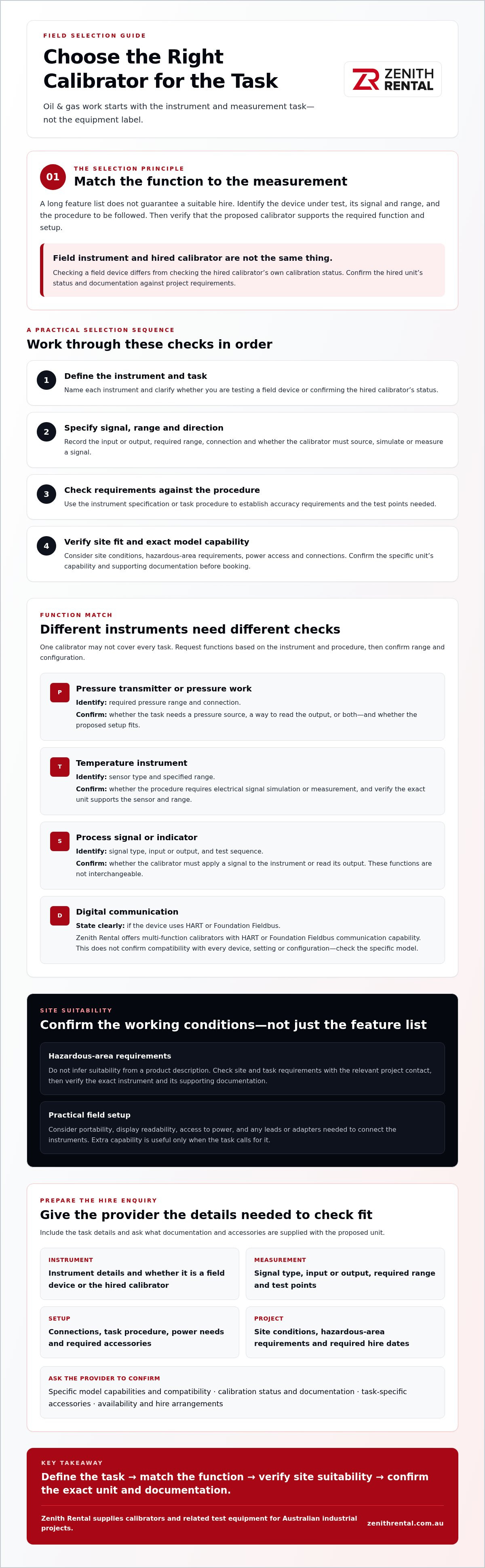
Prepare a Calibrator Hire Request That Prevents Site Delays
A clear enquiry gives the hire provider the details needed to check functional fit, availability and logistics. For calibrator hire for oil and gas industry projects, include the information below rather than relying on a broad equipment description.
Information to include in the hire enquiry
- 1. Job scope: Describe what you need to check and include the relevant task procedure or instrument specification. Note any accuracy or uncertainty criteria.
- 2. Instrument details: Provide the make and model of each instrument under test, plus its measurement type and input or output.
- 3. Signals and ranges: State whether the calibrator needs to source, simulate or measure a signal, and list the ranges required for the task.
- 4. Communication needs: Specify whether HART or Foundation Fieldbus communication is required. Share relevant instrument details so the specific unit’s capability can be confirmed.
- 5. Site and timing: Describe the operating conditions and any hazardous-area requirements that need confirmation. Provide the required hire and delivery dates, then ask the provider to confirm availability and arrangements.
Clear requirements help narrow down the options, but don’t assume accessories are included. Ask whether the proposed hire includes the leads, adapters, power supplies and other task-specific items your setup needs. Confirm the hired unit’s calibration status and the documentation supplied, then check that these meet your project requirements.
Checks to complete before equipment leaves for site
Before dispatch, confirm that the unit matches the agreed functions, ranges and communication capability. Check the accessory list against your connection requirements, and verify any site-suitability documentation relevant to the exact instrument. Ask the hire provider about the equipment’s condition and operating instructions so your team knows how to use the supplied unit as intended.
Keep the agreed equipment details and documentation accessible to the people receiving and using the hire. If a model or accessory changes, confirm the revised arrangement before dispatch, rather than discovering a mismatch at the worksite. For broader planning considerations, see the test equipment hire guide.
Ready to confirm the requirements for your project? Discuss your calibrator hire requirements with Zenith Rental.
Arrange Calibrator Hire for Your Oil and Gas Project
Work through the decision in order: define the measurement task, match the required functions and range, verify site suitability, then ask about availability and delivery details. This keeps the hire focused on the work planned and gives the provider the information needed to assess a suitable unit. Confirm the model and timing for your dates and requirements rather than making assumptions.
Zenith Rental supplies test and measurement equipment for industrial projects across Australia, including multifunction calibrators and intrinsically safe multifunction calibrators. Fluke, Megger and Transmille are among the brands in its stated inventory, but a brand name alone doesn’t establish that a particular model suits your task. Check the specific unit’s capabilities and availability before selecting it.
What to confirm with a hire provider
Ask which available unit matches the required function, range and communication needs. Confirm what calibration documentation is supplied, which accessories are included and whether the unit is available for your hire dates. If the worksite has access or hazardous-area requirements, ask the provider to confirm the exact instrument’s suitability and relevant documentation before booking.
Discuss national delivery arrangements directly, including the destination and timing required for your project. Availability, delivery options and hire inclusions can vary, so confirm each rather than assuming. Keep a record of what has been agreed so your team can check the equipment on arrival against the job scope.
Make the next step straightforward
Before contacting a provider, gather the instrument make and model, measurement type, required functions and range, procedure details, communication needs, site requirements and preferred dates. Identify any essential accessories or calibration documentation in your enquiry. These details help the provider assess functional fit and check what can be arranged.
With the scope clearly defined, you can make a considered enquiry for calibrator hire for oil and gas industry work and confirm the practical details before booking. Enquire about calibrator hire for your project.
Set Your Project Up with the Right Calibrator
A suitable hire starts with the task: identify the instrument, signal and range, then check the calibrator’s functions against the procedure or instrument specification. Confirm site conditions and the exact unit’s hazardous-area suitability where relevant. Before booking, clarify calibration documentation, accessories and delivery arrangements.
This preparation makes calibrator hire for oil and gas industry work more straightforward. It helps you ask focused questions and confirm equipment fit and availability before the planned work begins. Zenith Rental is an Australian-owned and operated specialist, with a parent company established in 2010 and national service coverage across Australia. Its confirmed hire categories include multifunction and intrinsically safe multifunction calibrators. Verify specific model capabilities and suitability for your task.
Share your instrument details, scope, required dates and site requirements to make your enquiry productive. Enquire about calibrator hire for your oil and gas project.
Frequently Asked Questions
What calibrator is suitable for oil and gas instrumentation?
The right calibrator depends on the instrument, measurement type, required range, signal and site conditions. For calibrator hire for oil and gas industry work, start with the instrument details and the procedure or specification governing the task. Confirm that the proposed unit can source, simulate or measure the required signal. For work in a hazardous area, verify the exact unit’s suitability and documentation before arranging hire.
Can I hire one multifunction calibrator for different instruments?
Possibly, but a multifunction calibrator’s functions and ranges vary by unit. Compare each instrument’s requirements, including pressure or temperature capability, electrical signals and digital communication, against the available model. Don’t assume one unit covers every task. Share your full instrument list and ask the hire provider to confirm the specific calibrator’s functions, ranges and required accessories before booking.
What information should I provide when requesting calibrator hire?
Provide each instrument’s make and model, measurement type, required range, signal functions and communication needs. Include the project dates, site conditions and any hazardous-area requirements that need checking. Ask what calibration documentation is supplied for the specific hire unit and whether task-specific accessories are included. These details help the provider assess functional fit and availability, rather than relying on a broad description such as “process calibrator”.
Do I need an intrinsically safe calibrator for oil and gas work?
Not for every task or site. Whether intrinsic safety is required depends on the area classification, work scope and applicable project requirements. Ask the responsible site contact to clarify what applies, then verify the exact calibrator’s suitability and supporting documentation with the hire provider. Don’t treat a general product category or description as proof that an instrument is approved for your site or task.
What calibration documentation should I request with a hired calibrator?
Ask what documentation is supplied for the specific unit and whether it meets your project, quality-system or audit requirements. Requirements can differ by organisation and task, so don’t assume a particular certificate or traceability status is included. Before booking or dispatch, confirm the document type, instrument identification and relevant dates with the hire provider. If your procedure specifies particular evidence, share that requirement in your enquiry.
How far in advance should I arrange calibrator hire?
Timing depends on the instrument required, availability, hire dates and delivery arrangements. Contact the provider once your work scope and schedule are clear, especially if you need particular communication functions, accessories or site-suitability checks. Ask whether the unit is available for your dates and confirm delivery timing for your destination. General lead-time assumptions can’t confirm current stock or project-specific logistics.
How do I know whether a calibrator supports HART or Foundation Fieldbus?
Check the field instrument and task requirements, then ask the provider to confirm that the exact calibrator configuration supports the communication method you need. HART and Foundation Fieldbus are distinct protocols, so support for one doesn’t establish support for the other. Share relevant instrument details and ask whether any accessories are required. Confirm compatibility with the intended device and configuration before arranging hire.