


Transformer Turns Ratio Meter Hire: 2026 Practical Guide
What if the most sophisticated meter isn’t the right one for your transformer? A successful test depends on matching the instrument to the transformer, the test objective and site conditions. With transformer turns ratio meter hire, confirming that fit early can help avoid delays and uncertainty when testing begins.
It’s understandable to want confidence that the equipment suits the transformer and that its documentation and accessories meet project requirements. A turns ratio meter measures the relationship between a transformer’s windings, helping you compare results with the nameplate and investigate potential winding or connection issues. The transformer must be de-energised and isolated before test connections are made.
This guide explains what a transformer turns ratio meter does, how to select one for your test programme and what to confirm before arranging hire. You’ll find practical checks for meter range and functions, calibration status and documentation, accessories, hire duration and dispatch arrangements. Preparing these details helps you make an informed choice and plan the test.
Key Takeaways
- Understand how ratio readings support transformer testing and help you assess results against the nameplate.
- Match the meter’s range and functions to your transformer configuration and test objective before choosing equipment.
- For transformer turns ratio meter hire, confirm calibration status, accompanying documentation and included accessories before booking.
- Prepare transformer details and test requirements in advance, then check hire dates, duration, delivery and return arrangements with the provider.
- Explore Zenith Rental’s digital transformer turns ratio meter hire and enquire with your requirements to confirm equipment suitability.
What Does a Transformer Turns Ratio Meter Measure?
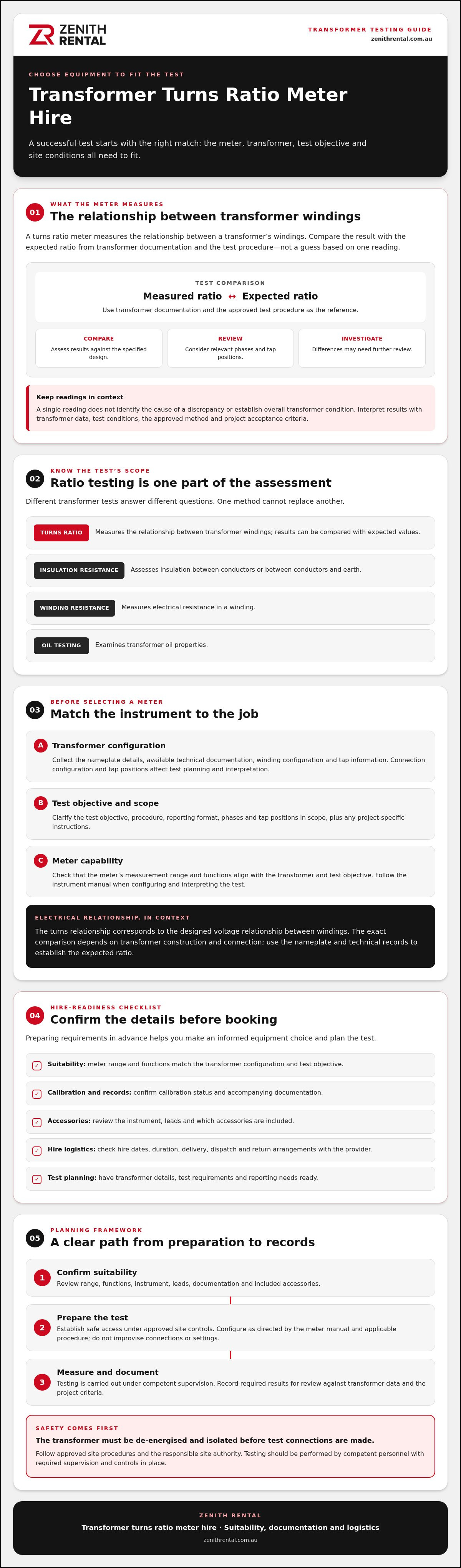
A transformer turns ratio meter measures the relationship between a transformer’s windings and compares the result with the expected ratio. That expected value should come from transformer documentation and the test procedure, not from a guess based on one reading. The measurement helps teams assess whether the windings’ relationship is consistent with the specified design.
Ratio readings can contribute to commissioning checks, planned maintenance and diagnostic test programmes. Comparing results across relevant phases or tap positions can highlight differences that need investigation. However, a ratio test is only one part of an assessment. Interpret its results alongside transformer data, the test method and the project’s acceptance criteria.
Ratio testing is distinct from other transformer tests. Insulation resistance testing assesses insulation between conductors or between conductors and earth. Winding resistance testing measures electrical resistance in a winding, while oil testing examines transformer oil properties. Each method answers a different question, so one test cannot replace another.
How the transformer turns ratio relates to voltage
A winding consists of turns of conductor around a magnetic core. In general, the relationship between the number of turns in the primary and secondary windings corresponds to the designed voltage relationship between them. A winding with more turns is designed for a higher voltage than one with fewer turns, but the exact comparison depends on the transformer’s construction and connection. For a useful grounding in Transformer principles, see the overview of how transformers operate.
Use the nameplate and technical records to establish the expected ratio for test planning. Connection configuration matters because line-voltage relationships may differ from individual winding relationships. Follow the instrument manual and approved procedure when setting up and interpreting the test. Tap positions also matter because they change the effective turns ratio.
What ratio testing can and cannot tell you
When required by the test programme, compare measured results with expected values across relevant phases and tap positions. Consistent records help reviewers assess readings in context, including the transformer’s configuration and test conditions. A result may warrant further review, but one reading alone does not identify the cause of a discrepancy.
A ratio result does not establish overall transformer condition or rule out other issues. It does not replace insulation resistance, winding resistance or oil testing, and it should not be used to diagnose a fault without supporting evidence. Follow the approved test procedure and project acceptance criteria, and have results interpreted by a competent person. When arranging transformer turns ratio meter hire, match the instrument’s capabilities to the intended test scope.
How Transformer Turns Ratio Testing Works
A reliable ratio test starts before the meter is connected. The transformer’s identity, winding arrangement, nameplate data and test objective all affect instrument configuration and how results should be recorded. Plan the work by following the meter’s manual, approved test procedure and site requirements, rather than relying on a generic setup.
Safety comes first. The transformer must be appropriately isolated and safe to access under approved site procedures. Testing should be carried out by competent personnel, with the required supervision and controls in place. This guide does not prescribe switching steps. Follow the responsible site authority and applicable procedures.
What information to collect before testing
Gather the transformer’s nameplate details and available technical documentation, including winding configuration and tap information. Confirm the test scope, procedure and reporting format. Before setup, check which tap positions and phases are in scope and clarify any project-specific instructions. These details give the operator a reference for configuration and help make readings useful for later review.
A high-level ratio testing sequence
Use this as a planning framework, not a substitute for the instrument manual or site procedure:
- Confirm suitability. Check that the meter’s measurement range and functions align with the transformer and test objective. Review the instrument, leads and supplied documentation, and confirm which accessories are included.
- Prepare the test. Establish safe access under approved site controls, then configure the instrument as directed by its manual and the applicable procedure. Don’t improvise connections or settings.
- Measure and document. Conduct the required tests under competent supervision. Record the transformer identifier, phase, tap position, configuration and reading together, using the project’s reporting format.
- Review results. Compare readings with appropriate transformer records and acceptance criteria. Keep deviations in context for competent interpretation rather than diagnosing from one result.
Consistent records make comparisons more useful, particularly when a programme covers multiple phases or tap positions. If you’re arranging transformer turns ratio meter hire, have the transformer details and test scope ready so equipment suitability can be checked before work begins. You can enquire about digital transformer turns ratio meter hire and provide those requirements for review.
Choosing the Right Transformer Turns Ratio Meter to Hire
Choose equipment to suit the transformer and planned work, not simply because a meter has more features. Before arranging transformer turns ratio meter hire, define the test scope and compare it with the meter’s verified range, functions and operating requirements. Use the project procedure and transformer documentation as your references.
Match the meter to the transformer and test scope
Consider the transformer’s ratings, winding arrangement and tap configuration. Then confirm the test procedure and required outputs. Don’t assume a meter supports a particular measurement range, phase assessment or vector group output. Check its specifications and manual with the provider.
| What to compare | Questions to confirm |
|---|---|
| Test scope | Which phases, taps and measurements does the approved procedure require? |
| Transformer configuration | Does the instrument support the winding arrangement and configuration being tested? |
| Range and functions | Does the verified measurement range cover the expected ratio, and are required outputs available? |
| Records and reporting | What readings or outputs must be captured, and what format does the project require? |
These checks help narrow the selection without assuming there is one universally suitable meter. If the programme requires phase, vector group or other recorded outputs, confirm that the proposed instrument provides them in a format accepted by your procedure.
Compare hire readiness, documentation and usability
Technical fit is only part of the decision. Confirm the practical details before booking, especially if the work is in the field or tied to a fixed project window.
- Accessories and setup: Ask which leads and accessories are included, and whether manuals or setup information will accompany the instrument. Check compatibility with the planned test and site conditions.
- Calibration records: Confirm the meter’s current calibration status and ask what supporting documentation is supplied. Check that it meets project requirements.
- Field use: Consider portability, access around the transformer and lead requirements. Confirm the equipment can be used in the intended work area.
- Operator readiness: Check whether operators are familiar with the instrument and what instructions or preparation they need. Verify hire dates, duration and dispatch arrangements against the test programme.
An Australian test equipment hire guide can complement these instrument-specific checks. Zenith Rental lists digital transformer turns ratio meter hire. Include the transformer details and test requirements in your enquiry so equipment suitability can be reviewed.
Prepare for a Transformer Turns Ratio Meter Hire
Preparing before you enquire can help resolve specification questions and keep your test programme organised. For transformer turns ratio meter hire, share enough detail for the provider to assess whether available equipment aligns with your transformer, test scope and project requirements. Confirm practical hire arrangements as well as technical suitability.
Information to include in your hire enquiry
Prepare the transformer and project details the provider will need to assess your request. A clear enquiry can surface questions before equipment is arranged.
- Transformer information: Provide the transformer type, nameplate details, winding configuration and available technical documentation. Note relevant tap positions and project instructions.
- Test objective: Describe the planned test scope and procedure, including required measurements, outputs or report format. Mention any documentation requirements.
- Dates and logistics: State the required test dates, intended hire duration and project location within Australia. Explain delivery constraints, such as site access or receiving arrangements, and ask the provider to confirm dispatch and return arrangements.
- Equipment requirements: Identify the leads, accessories and setup information your procedure requires. Ask which items are included, and confirm the meter’s range, functions, current calibration status and accompanying documentation.
Confirm availability and timing directly with the provider rather than assuming equipment can be dispatched by a particular date. Clarify the hire period, how the equipment will be returned and any handover steps. These details matter when coordinating a defined project.
Test-day checks and result records
On receipt, compare the instrument and listed accessories with the confirmed hire details. Review the supplied documentation and raise any discrepancies before testing. Follow the instrument manual, site-approved safety controls and authorised test procedures for setup and operation. Only competent personnel should conduct the work. A general guide is not a substitute for site instructions.
Keep records consistent throughout the test. Link each result to the transformer identity, setup or configuration, phase and tap position, then record readings in the required format. Clear records help the project team review results against relevant reference data and acceptance criteria.
Share your transformer details, planned test and timing with Zenith Rental to enquire about its digital transformer turns ratio meter hire offering and confirm equipment suitability. Enquire about transformer turns ratio meter hire.
Hire a Digital Transformer Turns Ratio Meter from Zenith Rental
Zenith Rental is an Australian-owned specialist in test and measurement equipment hire, serving customers nationally. Its listed range includes digital transformer turns ratio meter hire, providing access to specialist equipment for a defined project. The right fit depends on your transformer and approved test procedure, so confirm the instrument’s specifications and hire details before making plans.
A project-ready enquiry gives Zenith Rental the context to review what may suit your application and clarify what is available for your requested dates.
What to confirm with Zenith Rental
Discuss the transformer configuration and intended test procedure, then ask the provider to confirm the relevant equipment details. Check the exact model and specifications, including measurement range and functions, rather than assuming they meet your scope.
- Confirm which meter is available and whether it supports the transformer configuration and required test procedure.
- Ask which leads and accessories are supplied, and whether manuals or setup information accompany the hire.
- Check the equipment’s current calibration status and what documentation is provided, including whether it meets your project requirements.
- Clarify requested hire dates, duration, national delivery arrangements and return requirements directly with the provider.
These are details to verify, not assumptions about what a particular hire includes. Confirming them in advance helps align equipment, records and logistics with your test programme.
Make your hire enquiry project-ready
Prepare the transformer nameplate details, winding configuration and relevant technical documentation. Add a concise description of the test scope, required outputs or reporting format, the dates you need the equipment, and the project location and delivery information. Mention any site access or receiving constraints early so arrangements can be discussed.
This information gives the provider a clearer basis to review equipment suitability and confirm availability. It can also bring up questions about specifications, accessories or documentation before the test is due. As with any test equipment, follow the instrument manual and approved site procedures during setup and operation.
Discuss your transformer and project requirements with Zenith Rental to review the relevant hire details. Enquire about transformer turns ratio meter hire.
Set Up Your Transformer Test with Confidence
A dependable ratio test starts with a clear match between the meter, transformer configuration and test objective. Confirm the required range and functions, then check calibration documentation, accessories and hire arrangements before the project begins. On site, follow the instrument manual and approved procedures, and record results so they can be reviewed against relevant transformer data and acceptance criteria.
For transformer turns ratio meter hire, preparing your nameplate information, test scope and required dates helps the provider assess suitability and clarify practical requirements. Zenith Rental is an Australian-owned specialist in test and measurement equipment hire, serving customers nationally across Australia. Digital transformer turns ratio meter hire is a listed offering.
Discuss your project details with the team, including transformer configuration, documentation needs and delivery requirements, to confirm what’s suitable and available. Discuss your transformer turns ratio meter hire requirements and take the next step towards a well-prepared test programme.
Frequently Asked Questions
What is a transformer turns ratio meter?
A transformer turns ratio meter measures the relationship between a transformer’s windings and compares the result with the expected ratio. Technicians use readings as part of defined commissioning, maintenance or diagnostic procedures. Interpret results alongside the transformer’s documentation, configuration and project acceptance criteria. A ratio measurement can inform an assessment, but it does not confirm overall transformer condition or replace other tests required by the programme.
How does a transformer turns ratio meter work?
A transformer turns ratio meter applies a test signal and measures the relationship between windings according to the instrument’s operating procedure. The technician records readings for relevant phases or tap positions, then compares them with suitable reference information. Setup and interpretation depend on the meter, transformer and approved procedure. Follow the instrument manual and site controls, and ensure competent personnel conduct and assess the test.
When should you hire a transformer turns ratio meter?
Hiring can suit a defined commissioning, maintenance or diagnostic project when you need a specialist instrument temporarily. Before arranging transformer turns ratio meter hire, identify the transformer, test objective, required dates and documentation needs. Ask the rental provider to confirm the available meter’s functions, accessories, calibration status and suitability for your planned procedure. Checking these details early helps reduce the risk of choosing equipment that doesn’t fit the test scope.
What information do I need to hire a transformer turns ratio meter?
Prepare the transformer’s nameplate details, winding configuration, tap information and intended test scope. Include required hire dates, delivery information and any project reporting or documentation requirements. In your transformer turns ratio meter hire enquiry, share any procedure-specific functions or limits the instrument must support. Ask the provider to confirm the available meter’s model, specifications, supplied accessories and calibration documentation before finalising arrangements.
Can a turns ratio meter identify every transformer fault?
No. A turns ratio measurement does not establish the transformer’s overall condition or identify every possible fault. It provides information within a defined test programme, and results should be assessed against appropriate transformer data and project criteria. Other tests may be required to evaluate different aspects of condition. Avoid diagnosing a fault from one reading alone. Use competent personnel, supporting evidence and the relevant approved procedures.
What should I check before using a hired transformer turns ratio meter?
Check that the instrument suits the transformer and test scope, then compare the received equipment and accessories with the confirmed hire details. Review the manual, setup requirements and reporting format before work begins. Follow site safety controls and authorised test procedures throughout, with competent personnel responsible for operation and interpretation. If the equipment, documentation or setup requirements don’t match what was agreed, clarify the issue with the rental provider before testing.
Is a digital transformer turns ratio meter suitable for every transformer?
No. Suitability depends on the transformer configuration, approved test procedure, required measurement range and the meter’s confirmed functions. Don’t assume a digital instrument supports every winding arrangement or reporting requirement. Share the transformer details and test objective with the rental provider, then check the available meter’s specifications and accessories against project needs. Confirm hire availability and documentation directly before making plans, as these details can vary with the equipment offered.