


How to Use a Multi-Product Calibrator: A Professional Guide to Precision Calibration in 2026
Is your laboratory truly prepared for the rigorous digital traceability requirements of the new ISO/IEC 17025:2025 standard, or are you one incorrect lead connection away from a costly equipment failure? Mastering how to use a multi-product calibrator with absolute finesse is no longer just a technical requirement; it's the hallmark of an elite calibration professional. You likely recognize that these sophisticated assets demand more than just a cursory glance at a manual. The complexity of modern, high-resolution touch-screens and the pressure to maintain strict Australian compliance can feel daunting, especially when the precision of your client's most critical instruments hangs in the balance.
We promise to transform that complexity into a streamlined, professional workflow that ensures absolute accuracy and peace of mind. By refining your approach to these high-tier instruments, you'll eliminate the risk of damage and reinforce your status as a reliable partner in precision. This guide provides a clear, rhythmic sequence for operation, covering everything from safe terminal connections to the integration of Digital Calibration Certificates, ensuring your lab remains at the peak of the industry in 2026.
Key Takeaways
- Discover how the multi-product calibrator serves as the definitive central hub for your electrical workload, ensuring adherence to the most stringent Australian industrial standards.
- Establish a foundation for absolute precision by mastering environmental controls and the critical thermal stability achieved through dedicated warm-up periods.
- Refine your technical expertise by learning how to use a multi-product calibrator through a logical sequence of self-diagnostic tests and precise function selection.
- Protect your reputation and your equipment by identifying common sources of measurement noise and implementing elite troubleshooting techniques to maintain signal integrity.
- Enhance your operational agility by choosing high-end calibrator hire, which provides access to the industry's most advanced technology while eliminating the complexities of annual maintenance.
Understanding the Multi-Product Calibrator: Versatility in the Modern Lab
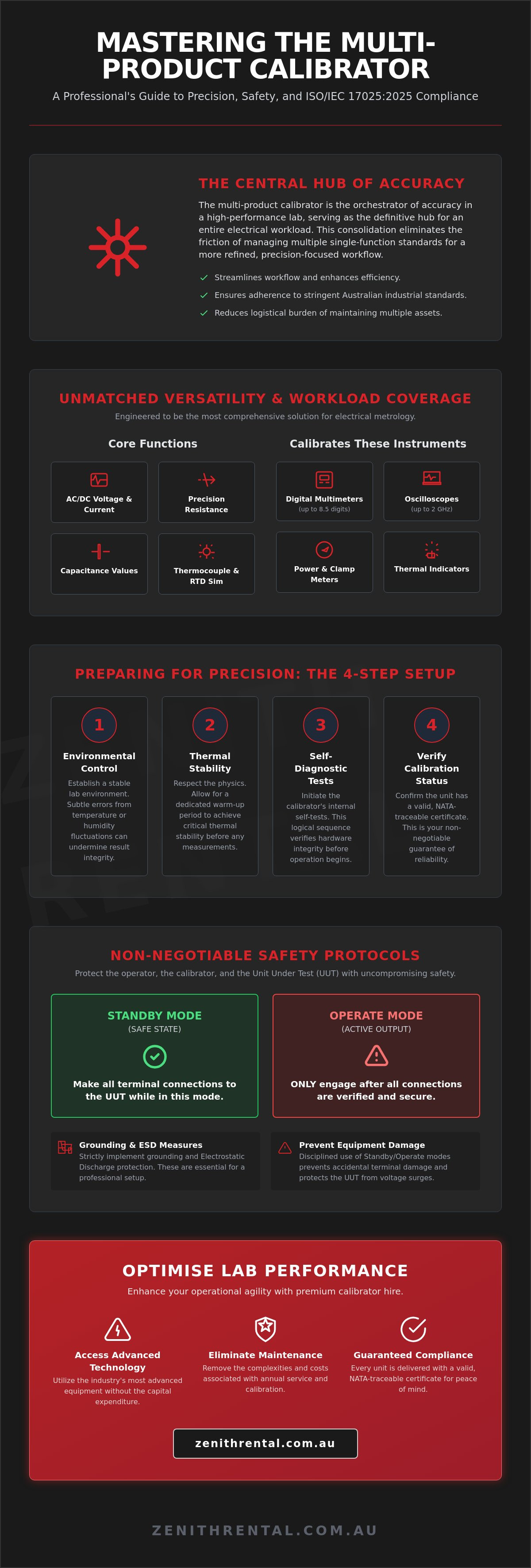
The multi-product calibrator is the sophisticated orchestrator of accuracy within a high-performance laboratory. By serving as the central hub for an entire electrical workload, these instruments eliminate the friction of managing multiple single-function standards. This consolidation allows for a more refined workspace where precision remains the primary focus. Within the framework of Australian industrial standards, where absolute compliance is a mark of professional prestige, these calibrators provide the necessary assurance of reliability. Mastering how to use a multi-product calibrator ensures that every measurement is grounded in excellence and total traceability. At its heart, this equipment embodies the fundamental Calibration principles that allow modern industry to function with confidence.
Choosing a versatile, high-tier calibrator significantly reduces the logistical burden of maintaining a vast inventory of aging assets. Instead of coordinating the annual service of ten different boxes, technicians can focus on a single, high-performance unit that handles a diverse range of electrical parameters. This efficiency doesn't just save time; it elevates the qualitative nature of the work, allowing for a more seamless and rhythmic calibration process. The ability to switch between functions with the touch of a button provides a level of momentum that standard equipment simply cannot match.
Core Functions and Workload Coverage
Modern multi-product calibrators are engineered to be the most comprehensive solution for electrical metrology. Their core capabilities typically include:
- High-stability AC and DC voltage and current sourcing.
- Precision resistance and capacitance values for component testing.
- Advanced simulation for thermocouples and RTDs (temperature sensors).
- Frequency and pulse outputs for timing and counter instruments.
These assets are specifically designed to calibrate digital multimeters (DMMs) ranging from standard 3.5 digit handhelds to high-precision 6.5 digit bench models. With specialized options, their reach extends to oscilloscopes with bandwidths up to 2 GHz, as well as power meters, clamp meters, and thermal indicators. This broad coverage ensures your lab can handle almost any technical challenge with a single, elite asset.
Essential Safety and Equipment Protection
Operating high-value calibration equipment requires an uncompromising focus on safety protocols to protect both the operator and the sensitive circuitry involved. Grounding and strict Electrostatic Discharge (ESD) measures are non-negotiable components of a professional setup. One of the most critical nuances in learning how to use a multi-product calibrator involves the disciplined use of "Standby" versus "Operate" modes. You should only engage the "Operate" mode once all terminal connections are verified and secure. This practice prevents accidental terminal damage and protects the Unit Under Test (UUT) from unexpected voltage or current surges. Adhering to these limits reflects a high-tier standard of care, ensuring that every instrument in your care remains in pristine condition.
Preparing for Precision: Environmental and Hardware Setup
The quest for absolute accuracy is a discipline that begins long before the first lead is connected to a terminal. Precision calibration is a carefully choreographed performance where the environment serves as the stage. To truly master how to use a multi-product calibrator, one must first respect the physical laws that govern electronic stability. A laboratory that ignores environmental variables risks introducing subtle errors that can cascade through a series of measurements, undermining the integrity of the results. Elite professionals treat the setup phase with the same reverence as the measurement itself, ensuring every variable is accounted for before the instrument leaves its standby state.
Before attempting any high-precision tasks, you must verify the calibration status of the multi-product unit. A valid, NATA-traceable certificate is your guarantee of reliability. Accessing high-tier technology via electrical test equipment calibrator hire ensures your lab begins every project with an asset that is already meticulously verified and ready for deployment. This proactive approach eliminates the logistical burden of internal asset management while maintaining the highest possible standard of service.
Environmental Stabilisation Requirements
Thermal equilibrium is the silent partner of measurement accuracy. Most professional laboratories maintain a strictly controlled temperature of 23°C ± 3°C to align with standard NIST calibration procedures. Humidity is equally vital; keeping levels between 20% and 50% prevents the formation of leakage currents that can plague high-resistance tests. Once powered on, the calibrator requires a dedicated warm-up period, typically between 30 and 60 minutes. This interval allows internal components to reach a stable operating temperature, minimizing the drift that occurs as circuits expand and contract thermally.
Hardware Inspection and Lead Management
The physical connection between the calibrator and the Unit Under Test (UUT) is often the most vulnerable point in the measurement chain. Meticulous lead management is a hallmark of a sophisticated lab. You should inspect every test lead for insulation integrity and ensure that contacts are free from oxidation, which can introduce unwanted resistance. Using shielded cables is essential for sensitive, low-level measurements to block electromagnetic interference. Arrange your workspace to keep leads as short as possible and avoid loops; this simple act of professional organization prevents inductive coupling and "noise" from distorting your high-sensitivity signals. Proper lead dress is not merely a matter of aesthetics; it's a technical necessity for achieving the most refined results.
Step-by-Step Guide: Operating Your Multi-Product Calibrator
Execution is where metrological theory meets the practical reality of the lab bench. Once your environment is stabilised and your equipment has reached thermal equilibrium, the actual process of learning how to use a multi-product calibrator becomes a matter of refined technical sequence. Modern instruments have evolved beyond the tactile, button-heavy interfaces of the past, opting instead for intuitive, high-resolution displays that guide the user through complex procedures with grace. This transition from legacy hardware to digital sophistication allows for a more rhythmic and error-free engagement with the Unit Under Test (UUT).
The initial power-up sequence should always include a comprehensive self-diagnostic test. These internal checks verify the integrity of the voltage references and current shunts, ensuring that the asset is performing at its peak before you begin your workload. This disciplined start-up routine projects a sense of absolute reliability, confirming that every component within the measurement chain is prepared for the high-precision tasks ahead.
Navigating the Modern User Interface
Modern calibrators utilize sophisticated touch-screen menus that mirror the ease of premium consumer electronics while maintaining professional authority. You can rapidly select functions such as AC Voltage or Resistance by tapping the primary icons. Parameters like frequency, wave shape, and specific voltage levels are configured through a logical hierarchy that minimizes menu diving. A standout feature in 2026 is Visual Connection Management; the instrument actually illuminates the specific terminals required for your chosen function. This visual guidance eliminates the risk of damaging expensive equipment through incorrect lead placement, providing a secure and confident user experience.
Executing the Calibration Sequence
Precision requires a patient hand. When you are ready to apply a signal, always transition from "Standby" to "Operate" with focused caution. The adjustment dial on these elite units provides tactile feedback, allowing for the subtle nulling of offsets with surgical precision. For those seeking maximum efficiency, many high-tier assets support automated procedures via MET/CAL software. Whether you choose manual stepping or an automated flow, the goal remains the same: a seamless, controlled delivery of the calibration signal that respects the limits of the UUT.
Data Recording and Traceability
The qualitative value of your service is ultimately captured in the data you provide to your clients. Documenting "As Found" and "As Left" data points is a non-negotiable requirement for professional transparency. Adhering to these NIST Calibration Principles ensures that your methodology remains statistically sound and globally recognised. Calculating measurement uncertainty for every point is the final step in producing a NATA-compliant report. By ensuring every step aligns with your lab’s test equipment hire Australia quality manual, you reinforce your status as a leader in industrial precision.
Troubleshooting and Maintaining Calibration Integrity
Precision is a living standard that requires constant vigilance. Even with a complete mastery of how to use a multi-product calibrator, subtle environmental shifts or internal hardware drift can introduce unwanted variables into your measurements. Maintaining the integrity of your results isn't a one-time event; it's a continuous commitment to excellence. When a measurement appears unstable or an instrument fails to meet expectations, the professional technician doesn't just record the error. They investigate the root cause with surgical precision, ensuring that the lab's reputation for absolute reliability remains untarnished.
Addressing an "Out of Tolerance" (OOT) condition is perhaps the most critical moment for a metrologist. A professional response involves more than just a recalibration of the asset; it requires a thorough impact analysis of every measurement performed since the last successful verification. This level of accountability is what separates elite service providers from the rest of the market. To ensure your facility always operates with the most dependable technology, you can secure your lab's performance with elite calibrator hire from a partner that understands these high-tier requirements.
Mitigating External Interference
In the high-sensitivity ranges of a multi-product calibrator, noise is the enemy of accuracy. In Australia, the 50 Hz mains hum is a frequent intruder. Implementing effective digital filtering and ensuring your instrument is properly grounded can mitigate this interference. Guard terminals play a vital role here; they provide a low-impedance path for common-mode noise, preventing it from reaching the measurement circuits. You must also remain mindful of thermoelectric EMFs. These tiny voltages occur when dissimilar metals meet at different temperatures, and they can easily skew low-voltage DC results. Using high-purity copper connectors and allowing for thermal stabilisation is the refined way to eliminate these errors.
Ensuring NATA Traceability
Traceability is the golden thread that connects your measurements to international standards. Maintaining a valid calibration chain for your Fluke or Transmille assets is essential for compliance with ISO/IEC 17025:2025. While most high-precision standards require external calibration every 12 months, your quality manual might dictate more frequent internal verifications. If a calibrator fails its internal self-test, it's a signal to stop work immediately. Don't attempt to bypass these warnings. A failed self-diagnostic is a clear indication that the instrument no longer meets its stated specifications, and continuing to use it would compromise every result that follows.
Optimising Lab Performance with Premium Calibrator Hire
In the pursuit of metrological excellence, the most successful laboratories are those that prioritise agility and absolute reliability. While mastering how to use a multi-product calibrator is a vital professional skill, the strategic decision to hire elite instrumentation often provides a superior path to success. Ownership brings with it the persistent weight of annual calibration cycles, maintenance schedules, and the inevitable creep of technological obsolescence. By choosing a sophisticated rental model, you liberate your team to focus on the finer details of their work while we manage the complexities of asset integrity and compliance.
Zenith Rental offers more than just a logistical solution. We provide a partnership grounded in the same standards of precision you provide to your clients. Every instrument in our fleet is impeccably maintained and delivered with the assurance of NATA-traceability. This commitment to quality ensures that your lab remains at the peak of the industry, capable of meeting the rigorous demands of the latest ISO/IEC 17025:2025 standards without the friction of heavy capital expenditure. It's a refined approach that mirrors the high performance of the assets we provide.
The Advantages of High-Tier Rental
The ability to scale your laboratory capacity instantly is a hallmark of a modern, efficient operation. Large-scale certification projects often demand a throughput that fixed assets cannot support. Through our premium hire service, you can integrate additional, high-performance calibrators into your workflow within days. This flexibility ensures your team always works with current hardware that is fully compliant with Australian industrial requirements. Should a technical challenge arise, our rapid national support and replacement service minimises downtime, maintaining the momentum of your most critical projects.
Selecting Your Elite Calibration Asset
Choosing the right tool for a specific workload is a mark of professional discernment. Selecting the ideal instrument requires a deep understanding of how to use a multi-product calibrator to its full potential across different manufacturers. Whether your requirements point toward the industry-leading Fluke 5560A with its expansive scope options or the versatile Transmille 3000 Series, we provide the assets that define the standard. For those operating in high-stakes environments, our range includes intrinsically safe multifunction calibrator hire, ensuring safety and precision in hazardous sites. Each choice reflects a commitment to the highest possible standard of service. Enquire about our elite calibrator range to elevate your laboratory standards today and experience the seamless nature of a truly professional calibration partnership.
Securing the Future of Metrological Excellence
Elevating your laboratory to the peak of industry standards in 2026 requires a seamless blend of technical mastery and elite hardware. By internalising the refined workflows and environmental disciplines discussed, you ensure that every result is a testament to professional prestige. Mastering how to use a multi-product calibrator with such surgical precision allows your facility to remain a benchmark for absolute reliability and global compliance.
To maintain this standard of excellence without the logistical friction of asset ownership, partnering with a high-tier specialist is the discerning choice. Zenith Rental provides impeccably maintained, NATA-traceable assets from world-leading brands like Fluke and Transmille. With our expert technical support and comprehensive national Australian coverage, your laboratory is always prepared for the most demanding certification projects. Explore our elite range of Multi-Product Calibrators for hire and take the final step toward uncompromising accuracy. We look forward to supporting your continued success in the pursuit of perfection.
Frequently Asked Questions
How long should I let my multi-product calibrator warm up before use?
You should allow your instrument to warm up for 30 to 60 minutes to achieve full thermal stability. This dedicated interval ensures that internal circuits and voltage references reach a consistent operating temperature, which is essential for maintaining the tight specifications required in elite laboratories. Skipping this step can lead to subtle measurement drift that compromises the qualitative integrity of your results.
Can I use a multi-product calibrator to calibrate an oscilloscope?
Yes, a multi-product calibrator can calibrate an oscilloscope if it is equipped with the appropriate wideband or oscilloscope calibration options. These sophisticated modules allow the unit to verify vertical deflection, horizontal timing, and bandwidth for instruments ranging from standard models to high-performance assets with bandwidths up to 2 GHz. This versatility makes the calibrator the definitive central hub for a diverse electrical workload.
What is the difference between "Standby" and "Operate" modes?
"Standby" mode keeps the output terminals de-energised, while "Operate" mode applies the programmed signal to the Unit Under Test. It is a mark of professional discipline to remain in standby until you have verified every connection and lead placement. This protocol protects the sensitive internal circuitry of the calibrator and prevents accidental damage to the instrument you are testing.
Is it necessary to use specific test leads for high-current calibration?
High-current calibration requires heavy-duty, low-resistance test leads specifically designed to handle the thermal and electrical stress of high-amperage outputs. Standard leads often lack the necessary cross-sectional area, which can cause significant voltage drops and heat generation. Using the correct high-current accessories ensures that the signal reaching the UUT remains stable and accurate, even at levels up to 30A.
How often does a multi-product calibrator need its own calibration?
A multi-product calibrator typically requires an external, NATA-traceable calibration every 12 months to maintain its verified status. Some high-precision environments may choose shorter intervals or perform regular internal verifications against a primary standard to monitor for drift. Adhering to this disciplined schedule is the only way to ensure your asset continues to perform at the peak of its technical specifications.
What should I do if the calibrator displays an "Overload" error?
When an "Overload" error occurs, you should immediately return the instrument to Standby and disconnect the Unit Under Test. This error typically indicates that the UUT is drawing more current than the calibrator can safely supply or that a short circuit exists in your lead configuration. Carefully inspect your setup and verify the UUT's health before attempting to re-engage the output.
Can a multi-product calibrator be used for on-site mobile calibration?
Modern multi-product calibrators are sufficiently robust for on-site mobile calibration, provided they are transported in high-quality, protective transit cases. When mastering how to use a multi-product calibrator in the field, you must still prioritise environmental stability. Always allow the unit to reach thermal equilibrium in the new environment before beginning measurements to ensure that the change in location doesn't affect your accuracy.
How do I ensure my calibration results are NATA-compliant?
To ensure your results are NATA-compliant, you must use a calibrator with a current, traceable certificate and follow a validated laboratory procedure. Every measurement should be performed in a controlled environment and include a calculated measurement uncertainty. Learning how to use a multi-product calibrator within a rigorous quality management system ensures that your documentation meets the highest possible standard for Australian industrial compliance.