


Digital Transformer Ratiometer Hire: A Project-Ready Selection Guide
A project-ready ratiometer hire starts with the transformer, not a feature checklist. Choosing digital transformer ratiometer hire can feel uncertain when the winding configuration, test procedure and site requirements all need to align before work begins.
Start by defining the transformer and the scope of testing. The right details help shape a focused hire enquiry and reduce the risk of arriving on site without the information or accessories your work requires. Zenith Rental provides nationwide hire of specialised electrical and power testing equipment, including digital transformer turns ratio meters.
This guide explains what to include in your enquiry, how to assess instrument suitability for your transformer configuration, and what to plan before testing. It also covers what ratio readings can indicate, and why they are not a complete assessment of transformer condition. A clear test scope and equipment brief help you prepare for an efficient hire and well-organised project.
Key Takeaways
- Use transformer configuration and nameplate details to frame equipment selection before comparing meter features.
- Define the test objective and required functions so your digital transformer ratiometer hire enquiry reflects the work planned.
- Use ratio readings to compare measured results with nameplate information, while recognising that they do not provide a complete condition assessment.
- Include calibration records and equipment requirements in project preparation to support measurement confidence and organised site work.
- Bring your transformer details, test plan and schedule together for a focused hire enquiry with Zenith Rental.
What a Digital Transformer Ratiometer Measures: And When to Hire One
A digital transformer ratiometer measures the relationship between a transformer’s windings and produces a turns-ratio reading for comparison with the expected value. Technicians use the transformer nameplate and applicable test procedure to establish that expected ratio. Digital transformer ratiometer hire is useful when a project needs a focused ratio check without purchasing specialist test equipment.
Ratio testing may form part of commissioning checks, planned maintenance or an investigation into suspected winding or connection issues. A discrepancy can indicate a reason for further examination, but it is not a diagnosis by itself. Interpret the result in light of the transformer’s configuration and other assessment findings.
How a measured turns ratio relates to transformer windings
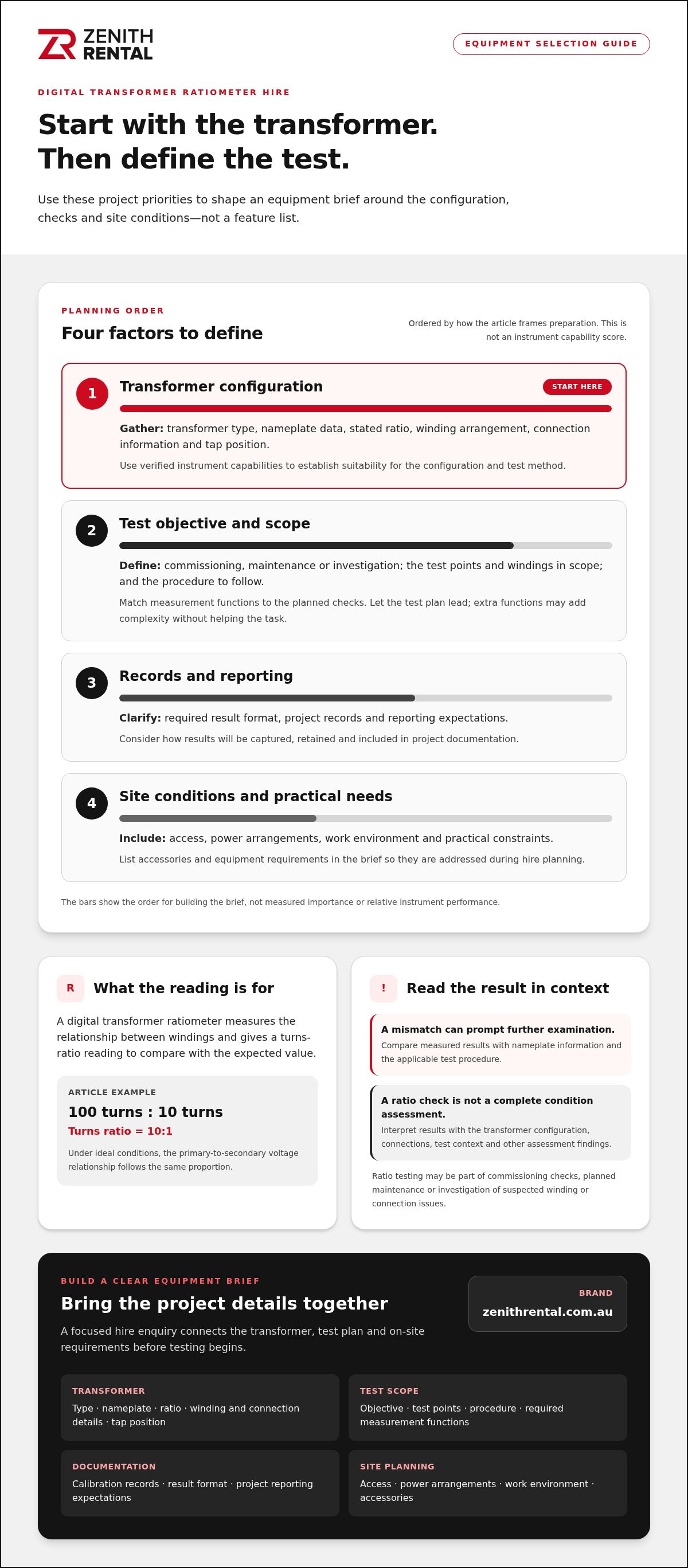
Consider a simple transformer with 100 turns on its primary winding and 10 on its secondary. Its turns ratio is 10:1, and under ideal conditions the primary-to-secondary voltage relationship follows the same proportion. A ratiometer reading lets technicians compare the measured relationship with the transformer’s nameplate expectation. The transformer ratio arm bridge provides background on a related measurement principle, though digital instruments may use different designs.
What ratio testing can, and cannot, tell you
A ratio result can identify a mismatch between measured and expected values, prompting the testing team to investigate further. Interpretation depends on details such as winding arrangement, connections and test context, so the nameplate and test plan matter as much as the displayed reading.
A ratio check alone does not establish the overall condition of a transformer or diagnose every possible fault. Treat it as one element of a wider test programme, with other assessments selected to suit the asset and the question being investigated.
Before arranging a hire, identify the transformer configuration, test objective and reference information technicians will use to assess results. This helps align the instrument with the work planned, whether the task is commissioning, routine maintenance or fault investigation.
How to Choose a Digital Transformer Ratiometer for Your Test Scope
Start with the transformer and the work planned, then translate those details into equipment requirements. This keeps selection focused on practical suitability rather than a long feature list.
| Project requirement | Information to gather | Selection consideration |
|---|---|---|
| Transformer configuration | Transformer type, nameplate data, winding arrangement and connection information | Choose an instrument whose verified capabilities suit the configuration and test method. |
| Test objective | Commissioning, maintenance or investigation, plus the test points required | Match the instrument’s measurement functions to the intended checks. |
| Records and reporting | Required result format, project records and reporting expectations | Consider how results will be captured, retained and incorporated into project documentation. |
| Site conditions | Access, power arrangements, work environment and practical constraints | Include site conditions in the equipment brief so they inform selection. |
Which transformer details should guide your selection?
Record the transformer type and relevant nameplate details, including the stated ratio and available winding or connection information. Note the tap position, which windings and test points are in scope, and any project reporting requirements. These details help define the equipment needs, but a specific instrument’s suitability for a configuration must still be established from its verified capabilities.
Ratiometer suitability depends on transformer configuration and intended test scope. A feature-rich meter is not automatically the right choice. If the project requires ratio measurements and a clear record of results, extra functions may add complexity without helping the task. A broader test requirement, on the other hand, may call for capabilities beyond ratio measurement. Let the test plan lead.
Which meter capabilities and documentation matter?
List the functions required by the procedure instead of comparing instruments by feature count. Include calibration documentation and any accessories needed for the work in the equipment brief, so these are addressed during hire planning rather than becoming a last-minute site concern. For context on recognised transformer test methods, consult the IEEE Standard Test Code alongside the applicable project procedure.
For broader preparation, Zenith Rental’s Australian test equipment hire guide covers the wider planning process. Bring together transformer details, test objectives, required functions, documentation, accessories and site conditions to give your digital transformer ratiometer hire enquiry a clear technical foundation. Explore specialist test equipment hire as you prepare your project requirements.
Digital Ratiometer Hire Concerns: Suitability, Calibration and Test Limits
For digital transformer ratiometer hire, suitability depends on matching the instrument to the transformer and planned test, not selecting a meter by features alone. Transformer configuration, intended test points and the procedure all shape what the instrument needs to do. Include these details in the hire scope so equipment selection reflects the actual work.
How to assess hire readiness and measurement confidence
Calibration information helps the testing team assess measurement confidence and maintain clear project records. Specify the calibration status and relevant documentation required by your project or quality system in the equipment brief. Record what documentation is needed rather than assuming that a particular certificate or traceability arrangement applies to every instrument.
Accessories matter, too. List the leads and other items required by your test procedure, then name them in the equipment brief. This helps prevent gaps between the planned test and the kit prepared for site work. Including these requirements in the enquiry gives the hire request a more complete technical foundation.
Why a ratio result is not a complete transformer diagnosis
A ratio result only becomes meaningful when compared with the transformer nameplate and interpreted in the context of the test. It addresses the relationship between windings, but does not assess every possible electrical, mechanical or insulation-related issue. An unexpected reading may prompt further investigation, but it does not identify the cause by itself.
Interpret readings alongside the transformer’s configuration, connection information and wider test programme. The IEC 60076-1 standard provides an authoritative reference for general power-transformer requirements and testing context. The applicable project procedure should guide the work and interpretation.
Keep safety arrangements within the approved site process. Follow the relevant isolation requirements and authorised test procedures, and ensure the people carrying out the work understand the test plan. A carefully scoped hire supports the measurement task, while a broader assessment depends on the full programme of checks and competent interpretation.
Prepare a Digital Transformer Ratiometer Hire: Project-Ready Checklist
A structured brief makes a digital transformer ratiometer hire enquiry clearer and connects the equipment request to the work planned. Gather the essentials before arranging the hire:
- Define the test objective. State whether the work supports commissioning, maintenance or an investigation, and identify the results the test team needs.
- Record transformer details. Capture the transformer type, nameplate information, winding arrangement and relevant connection details. Note the tap position and which windings and test points are in scope.
- Describe the test plan. Include the procedure or project requirements that will guide the measurement, along with reporting or record-keeping needs.
- List equipment requirements. Identify required functions, calibration documentation and accessories based on the test scope. Include site conditions that could affect equipment preparation or use.
- Set out the hire schedule. Provide planned test dates, expected hire duration, delivery requirements and return arrangements. Include relevant access or timing constraints without assuming a particular lead time.
A focused ratiometer enquiry needs the transformer’s nameplate and configuration, test objective, equipment and documentation requirements, and project schedule.
What to include in your equipment hire brief
Bring the details together in one concise brief. Describe the transformer and its configuration, explain the planned test and dates, then itemise the functions, documentation and accessories required by the procedure. Add practical site information, such as access limitations or other logistical constraints that could affect equipment preparation. This gives the hire request useful context without relying on assumptions about instrument capabilities or included equipment.
How to prepare for test day and record results
Before testing, align the team on the approved procedure, site safety controls and isolation arrangements. Prepare a consistent record that captures the transformer’s nameplate details, tap position, test points, measured ratios and relevant observations. Keep the applicable procedure and equipment documentation with the results so readings can be reviewed in context and retained with project records.
With these details assembled, your enquiry is ready for a practical next step. Arrange digital transformer ratiometer hire with Zenith Rental using your project brief to communicate the scope and schedule.
Arrange Digital Transformer Ratiometer Hire with Zenith Rental
A clear equipment brief turns project planning into a focused next step. For digital transformer ratiometer hire, bring together the transformer details, test objective, required functions and project schedule. Zenith Rental provides nationwide hire of specialist electrical and power testing equipment, including digital transformer turns ratio meters, for projects across Australia.
What to include when enquiring about meter hire
Give the enquiry enough technical context to guide equipment selection. Include:
- Transformer information: type, configuration, nameplate details, winding arrangement and relevant connections.
- Test scope: the objective, test points, intended procedure and technical requirements that should shape instrument selection.
- Equipment needs: required functions, calibration documentation and accessories identified for the planned work.
- Project logistics: intended dates, expected hire duration, delivery and return requirements, plus site access or handling considerations.
Specifics matter. Naming the winding arrangement and test points, for example, gives the equipment selection process more useful context than requesting a meter for a transformer test without further detail. Include any particular record-keeping or reporting expectations as well.
Move from requirements to a confident hire plan
A well-prepared enquiry brings the technical and practical elements together. Transformer information and the test objective define the task; function, documentation and accessory requirements shape the equipment brief; and the schedule and logistics establish the project framework. Zenith Rental hires specialist test equipment to suit project requirements, helping you progress from a defined scope to a considered equipment plan.
Gathering these details before submitting your request makes it easier to communicate the work clearly and keep planning aligned with site needs. Keep the relevant nameplate information and test documentation close at hand so the enquiry reflects the actual transformer and procedure.
Enquire about digital transformer ratiometer hire with your transformer details, test scope and project schedule.
Turn Your Test Scope into a Ready-to-Act Hire Plan
A confident digital transformer ratiometer hire starts with the transformer and test objective. Gather nameplate and configuration details, define the required measurements, then include documentation, accessories and project timing in your enquiry. This helps align the instrument request with the work planned.
Keep ratio readings in perspective. They support comparison with expected nameplate values, but do not replace a wider transformer assessment. Calibration documentation and a clear record of test conditions help place results in context.
Zenith Rental specialises in high-precision electrical and power testing equipment hire, serving project requirements nationally across Australia. Share your transformer details, planned tests and schedule to shape a focused equipment enquiry.
Enquire about digital transformer ratiometer hire with your project brief and take the next step towards a well-prepared test.
Frequently Asked Questions
What does a digital transformer ratiometer measure?
A digital transformer ratiometer measures the turns ratio, or relationship between a transformer’s windings. Technicians compare its reading with the expected ratio shown on the transformer nameplate, considering the winding arrangement and test procedure. This can highlight a discrepancy for further investigation, but does not establish the transformer’s overall condition. Ratio testing is one measurement within a broader assessment, not a substitute for other checks required by the project.
How do I choose a transformer turns ratio meter for hire?
Choose a meter by matching its verified capabilities to the transformer configuration and intended test scope. Gather the transformer type, nameplate details, winding and connection information, tap position, test points, required functions and site conditions. Include reporting, calibration-documentation and accessory requirements in your enquiry. For digital transformer ratiometer hire, a precise project brief is more useful than selecting the instrument with the longest feature list.
Can a turns ratio test identify every transformer fault?
No. A turns ratio test measures the relationship between transformer windings; it does not identify every possible electrical, mechanical or insulation-related fault. An unexpected reading may indicate a discrepancy that warrants further investigation, but the result alone does not identify its cause. Interpret readings against the nameplate and test context, then consider them alongside other assessments in the project’s wider test programme.
What transformer information should I provide for a ratiometer hire enquiry?
Provide the transformer type, nameplate details, winding arrangement and relevant connection information. Also describe the test objective, which windings or test points are in scope, and any required meter functions. Add the intended project dates, hire duration, delivery and return needs, plus site or access constraints. This gives the equipment enquiry a clear technical and logistical basis without relying on assumptions about instrument suitability.
Does a transformer turns ratio meter need calibration documentation?
Calibration documentation helps you assess measurement confidence and maintain useful project records. Include calibration status and the documentation required by your project or quality procedures in the hire brief. Documentation details can vary by instrument, so do not assume a particular certificate or traceability arrangement. Retain the applicable equipment records with the test results to support later review and interpretation.
What should I prepare before using a hired transformer ratiometer?
Prepare the approved test procedure, transformer nameplate information and a clear plan for the test points. Identify the accessories required by the procedure and include them in the equipment brief. Before testing, follow site isolation arrangements and safety controls, and ensure authorised personnel understand the plan. Set up a consistent record for measured ratios and relevant observations, then keep it with the project documentation.
How does transformer configuration affect turns ratio testing?
Transformer configuration affects how winding relationships and connections are interpreted, so it informs the test setup and comparison with expected values. Consider winding arrangement, connection details and the points being tested alongside the nameplate and applicable procedure. These details also guide instrument selection: the meter’s suitability for the specific configuration must be established from its verified capabilities, rather than assumed from a general ratio-testing function.